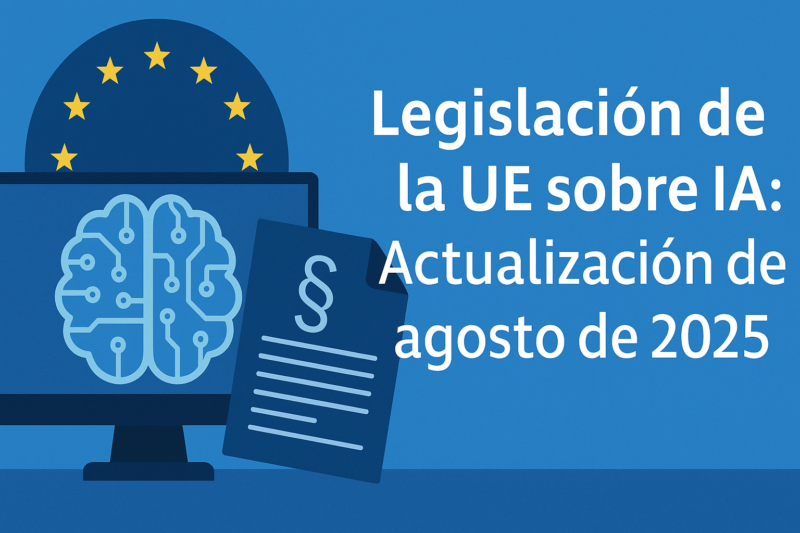
The European Union has taken a decisive step in the regulation of artificial intelligence. From the 2 of August of 2025 new ones are in force governance standards for AI, a legal framework that seeks to guarantee responsible use, safe and transparent of this technology.
This change affects both large technology companies and journalists, communication agencies and SMEs, who increasingly depend on AI to optimize their work and being up to date with current legislation can be a challenge and an opportunity.
What does the new AI legislation in the EU include??
The regulations focus especially on the general purpose AI system providers (GPAI), that must meet requirements in four key areas:
-
Transparency: report on the operation and data that train AI models.
-
Risk management: identify and reduce possible negative impacts.
-
Copyright Compliance: protect intellectual property in the use of content.
-
Security by design: Ensure reliability and protection from the development phase.
Besides, los high risk AI systems integrated into critical sectors will have specific adaptation periods, with deadline in August of 2027.
Regulation and innovation: what it means for companies and SMEs
The European AI legislation combines regulation with investment. Its objective is to protect citizens and, at the same time, promote technological innovation.
For businesses—including SMEs and startups—, he AI compliance it is no longer optional: It is a fundamental requirement to be able to compete in the European market.
But not everything is obligations. Organizations that commit to responsible and strategic use of AI will be able to obtain a competitive advantage, reinforcing the trust of its customers and positioning itself better against the competition.
In conclusion, to new EU legislation on AI (2025) will set the course for how we use artificial intelligence in the coming years. Being up to date on these regulations is essential for journalists, agencies and companies that want to harness the potential of AI safely, ethical and aligned with Europe's digital future.